


Apple leaf / Appelblaar
Apple leaf / AppelblaarThe Apple leaf is a medium- to large-sized tree with a wide-spreading, dense and rounded crown. The main stem is tall, straight and bare, occasionally bent and twisted.
Botanical Name:
Philenoptera violacea
Did you know?
The wood of this attractive tree makes a stunning ornamental display.

Broomcluster fig / Besemtrosvy
Broomcluster fig / BesemtrosvyThis tree boasts a massive spreading crown. The figs are born in large clusters on the stem of the tree and very often low down close to the ground. Like most figs, it can be found along rivers and other water sources. It provides food for a lot of animals.
Botanical Name:
Ficus sur
Did you know?
Fig jam can be made from the fruits!
Bushveld gardenia / Bosveld katjiepiering
Bushveld gardenia / Bosveld katjiepiering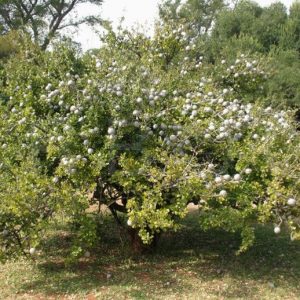
Bushveld gardenia / Bosveld katjiepiering
Bushveld gardenia / Bosveld katjiepieringA small, bushy tree – good to use for screening. The flowers are showy, solitary, large, white in colour and sweetly scented.
Botanical Name:
Gardenia volkensii
Did you know?
The gardenia volkensii is used medicinally as a cure for intestinal worms as well as infusions of the fruit and roots are used to induce vomiting.
Cape ash / Kaapse essenhout
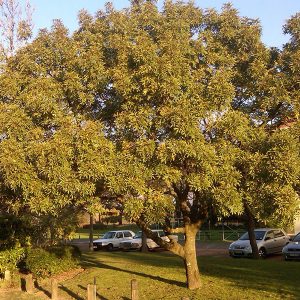
Cape ash / Kaapse essenhoutThis is a medium to large attractive tree that has been used as a street tree in many towns and cities of South Africa. It is also ideal for spaces where you need to create a canopy in a relatively short space of time. Its crown is rounded and autumn foliage yellow or reddish.
Botanical Name:
Ekebergia capensis
Did you know?
The fruit is enjoyed by an array of game, from all kinds of bird species to bushbuck and baboons.

Cheesewood / Kasuur
Cheesewood / KasuurA small to medium-sized, well-shaped tree with glossy leaves that have a resinous smell when crushed. A beautiful garden tree, which can be grown in sun or semi-shade, and can be used in forest and bush clumps as well as being used as a hedge plant. It’s a wonderful shade tree, and with its non-aggressive root system it’s ideal for small gardens and containers.
Botanical Name:
Pittosporum viridiflorum
Did you know?
Many birds, including the Red-eyed Dove and several starlings eat the seeds. Goats and game (Kudu, Nyala, and Bushbuck) browse the leaves.
False olive / Vals olyf
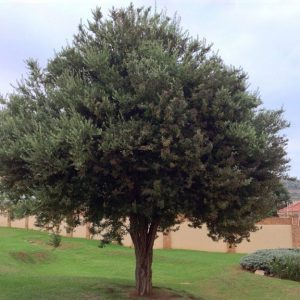
False olive / Vals olyfIf you want to attract butterflies, moths and birds to your garden the false olive is the way to go – not only does it provide food for wildlife it is also a sweetly scented and beautiful tree.
Botanical Name:
Buddleija saligna
Did you know?
False olive makes good fuel wood as it burns with an intense heat.

Flatcrown / Platkroon
Flatcrown / PlatkroonA magnificent tree with an unmistakeable spreading flat crown. The leaves are dark green above, yellowish or rusty velvety below. It’s ideal for providing shade. The flowers are a strikingly white or greenish white during spring.
Botanical Name:
Albizia adianthifolia
Did you know?
In rural areas, seeds are considered edible and are used for making a sauce.
Forest bushwillow / Bosvaderlandswilg
Forest bushwillow / Bosvaderlandswilg
Forest bushwillow / Bosvaderlandswilg
Forest bushwillow / BosvaderlandswilgA handsome, quick growing and reasonably cold resistant tree that is recommended for shady areas in gardens with a mild to warm climate. The crown is rounded with dark green foliage, with reddish autumn colours and sometimes whitish spring flowers.
Botanical Name:
Combretum krausii
Did you know?
Combretums are pollinated by various kinds of insects, including bees. They have adapted to wind dispersal by developing a wing-like fruit structure that can carry the seed with the help of air currents or wind. Some animals are known to eat Combretum fruit and also help with the seed dispersal.

Forest elder / Bosvlier
Forest elder / BosvlierA small tree ideal as a focal point in the garden or it makes a attractive street tree. A lovely dense and rounded crown is often evident, contributing greatly to the visual appeal of the species.
Botanical Name:
Nuxia floribunda
Did you know?
The flowers attract a host of insects. The abundant supply of nectar makes it a good honey tree.
Forest natal mahogany / Bosrooiesenhout
Forest natal mahogany / Bosrooiesenhout
Forest natal mahogany / Bosrooiesenhout
Forest natal mahogany / BosrooiesenhoutTrichilia dregeana is a lovely large tree that inhabits evergreen forests in high rainfall areas. It is a highly ornamental species with considerable cultural and ecological value to match.
Botanical Name:
Trichelia dregeana
Did you know?
The tree provides suitable nesting sites for a number of bird species.
Henkel’s yellow / Henkel-se-Geelhout
Henkel’s yellow / Henkel-se-Geelhout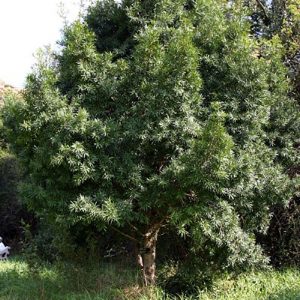
Henkel’s yellow / Henkel-se-Geelhout
Henkel’s yellow / Henkel-se-GeelhoutPodocarpus henkelii is a very neat decorative tree suitable for both home gardens and large landscapes. It makes and excellent specimen tree for lawns and is a good choice for an avenue. Podocarpus henkelii is also suited for formal gardens, as it can be pruned to the desired shape. It can also be left to achieve an informal finish.
Botanical Name:
Podocarpus henkelii
Did you know?
As a nesting site, the trees, especially older, large specimens, are favoured by many birds.
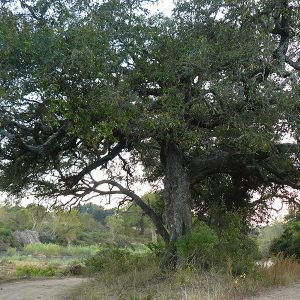
Jackalberry / Jakkalsbessie
Jackalberry / JakkalsbessieA medium-sized tall, upright tree with a dense canopy. The bark is black to grey with a rough texture. They often grow on termite mounds.
Botanical Name:
Diospyros mespiliformis
Did you know?
The jackalberry has a fantastic mutualism and symbiotic network with many living organisms, from human beings to small insects. There is a complex ecological system revolving around this tree. It is one of the savanna giants that can live for more than 200 years.
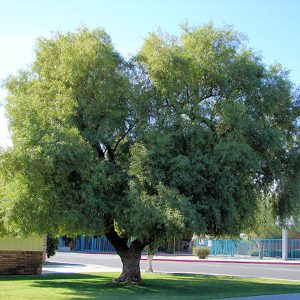
Karee / Karee
Karee / KareeThe karee is a small- to medium-sized tree with a willow-like appearance due to its drooping habit. It’s not just an excellet shade tree, but also a great street tree. It can also be planted in parks or office complexes.
Botanical Name:
Searsia lancea
Did you know?
Searsia lancea is useful in providing natural soil stabilisation and increasing infiltration of rainwater into the soil, thus reducing erosion and raising the ground watertable.

Knobbly fig / Knoppiesvy
Knobbly fig / KnoppiesvyJust like many of the fig species, the knobbly fig feeds a variety of animals and has a beautiful growth form. It may grow as an ordinary, stand-alone tree or in a cluster.
Botanical Name:
Ficus sansibarika
Did you know?
The leaves are browsed by elephants, giraffe, kudu and nyala.
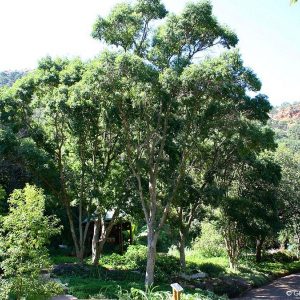
Lavender tree / Laventel boom
Lavender tree / Laventel boomHeteropyxis natalensis is an ideal tree for home gardens – a good focal point. It doesn’t get too big and the root system is non-invasive. The tree is usually multistemmed, the crown is rounded and foliage drooping.
Botanical Name:
Heteropyxis natalensis
Did you know?
A favourite of the black rhino and the leaves are used in potpourrie because of their signature scent.
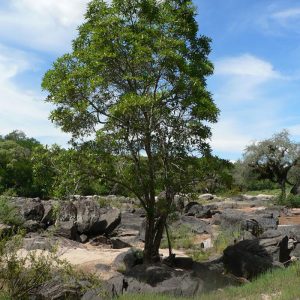
Matumi / Mingerhout
Matumi / MingerhoutA full grown matumi is something to behold! The trunk is tall and straight and the crown rather narrow. If in optimal conditions such as a warm climate and plenty of water a matumi will grow fairly quickly.
Botanical Name:
Breonadia salicina
Did you know?
Matumi’s twigs are used as toothbrushes in West Africa.
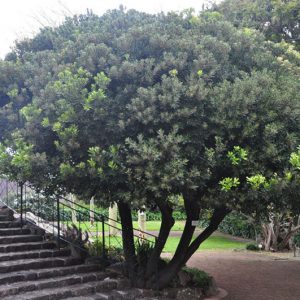
Natal guarii / Natal gwarrie
Natal guarii / Natal gwarrieWith its rounded crown and dark green foliage, the natalgwarrie is suited to an array of differnent types of gardens. The bushy, shrubby and small habitat tree is excellent for screening.
Botanical Name:
Euclea natalensis
Did you know?
It bears fruit which is edible and eaten by birds, monkeys and humans too! The twigs can be used as a toothbrush if needed.
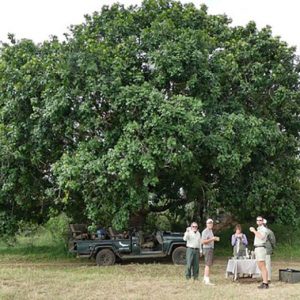
Natal mahogany / Natal mahonie
Natal mahogany / Natal mahonieThe Natal mahogany is an evergreen tree with handsome dark green glossy leaves and a wide-spreading crown. Its sweet-scented flowers will attract bees and birds to your garden.
Botanical Name:
Trichelia emetica
Did you know?
The powdered bark of Trichilia emetica is a popular remedy for stomach and intestinal ailments. The bark is also used to produce a pinkish dye
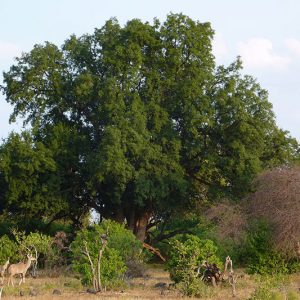
Nyala tree / Nyala boom
Nyala tree / Nyala boomXanthocercis zambesiaca has a heavy, rounded crown and somewhat drooping branchlets.
Botanical Name:
Xanthocercis zambesiaca
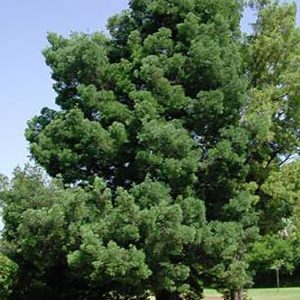
Outeniqua yellowwood / Geelhout
Outeniqua yellowwood / GeelhoutThis fast-growing, majestic yellowwood with its elegant shape is certainly a tree for all seasons and all gardens. It is an excellent container plant and can also be decorated and used as an indoor Christmas tree.
Botanical Name:
Podocarpus falcatus
Did you know?
Podocarpus falcatus could make an ideal indigenous substitute for the exotic pine trees currently being used in plantations. Trials done at a forest station at Magoebaskloof showed that the yield is similar, with the growth rate and quality of the wood comparing favourably to that of commercial pine.

Red ivory / Rooi ivoor
Red ivory / Rooi ivoorThis medium-sized and neatly shaped tree normally grows in groups with other trees and is very attractive to birds. The leaves are glossy dark green above and pale green below. It’s generally a smaller tree than the berchemia discolor with smaller leaves and reddish fruit.
Botanical Name:
Berchemia zeyheri
Did you know?
The delicious fruits are eaten fresh. They may be stored in containers and the sticky sweet mass may still be edible after several months.
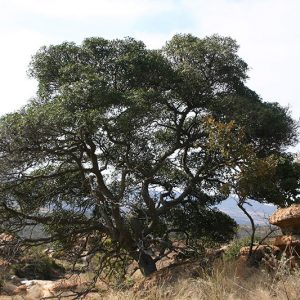
Red milkwood / Moepel
Red milkwood / MoepelA medium sized decorative tree that has a spreading, densely rounded crown. It has the potential to make an excellent evergreen garden specimen for larger gardens, parks and golf courses. This tree casts a deep shade, which offers a cool escape from the hot African sun.
Botanical Name:
Mimusops zeyheri
Did you know?
The Transvaal red milkwood has gained its popularity with people, birds as well as monkeys and baboons through its tasty fruit which are sweet and high in vitamin C.

Silky thorn / Sydoring
Silky thorn / SydoringSuitable for medium-sized gardens – the silky thorn with red bark on the young stems glows in the sunlight while the mature bark has dark brown rough strips with a red background. This beautiful Acacia attracts birds, insects and butterflies besides making a wonderful garden plant.
Botanical Name:
Vachellia rehmanniana

Sweet thorn / Soetdoring
Sweet thorn / SoetdoringThe sweet thorn makes a beautiful garden specimen. The bright yellow flowers look very striking against the dark green foliage. The rough, dark brown bark is also most attractive. The flowers are sweetly scented and are renowned for attracting insects which are essential to any bird garden.
Botanical Name:
Vachellia karoo
Did you know?
This is one of South Africa’s most beautiful and useful trees. It is integrally part of our country’s history having been used for everything from raft-making to sewing needles and fencing for the houses of the royal Zulu women. The thorns were even used by early naturalists to pin the insects they collected! It is very widespread throughout southern Africa and there are different forms in some places, which can be confusing.
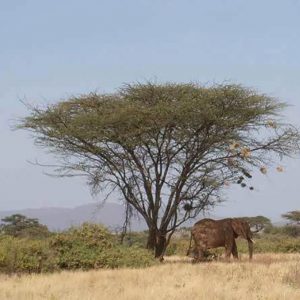
Umbrella thorn / Haak-en-steek
Umbrella thorn / Haak-en-steekA drought-resistant tree with the classic, umbrella-shaped canopy associated with thorn trees. Many bird species take advantage of the protection it offers and build their nests in the canopy.
Botanical Name:
Vachellia tortillis

Water pear / Water peer
Water pear / Water peerA lovely medium-sized to large tree with a smooth greyish-white single stem on young trees and beautiful purplish-red young leaves. This handsome tree is grown in gardens for its deep shade.
Botanical Name:
Syzigium quineense
Did you know?
The wood is pale red, hard, strong, durable and easy to work.

Waterberry / Waterbessie
Waterberry / WaterbessieThis beautiful tree is home to many birds and insects. The leaves are elliptic to circular, bluish green on top and a paler green below.
Botanical Name:
Syzigium cordatum
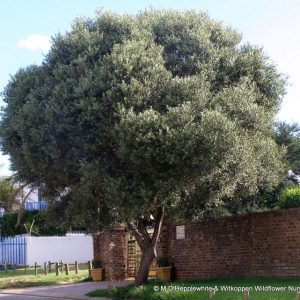
Wild olive / Wilde olyf
Wild olive / Wilde olyfThe wild olive is neatly shaped with grey-green to dark-green leaves above and greyish below. This tree is an asset on farms and game farms, especially in very dry areas because it is extremely hardy and is an excellent fodder tree.
Botanical Name:
Olea sub. Africana
Did you know?
The flowers attract a host of insects. The abundant supply of nectar makes it a good honey tree.

Wild plum / Wilde pruim
Wild plum / Wilde pruimA fast-growing tree with many uses – not only do wild plums provide shade, they also bear fruit that are loved by many birds and animals. Nowadays they are popularly planted as a street tree in a number of South African towns and cities.
Botanical Name:
Harpephyllum caffrum
Did you know?
The main useof wild plum bark is as a facial sauna and skin wash to treat eczema and acne.
