

Silky thorn / Sydoring
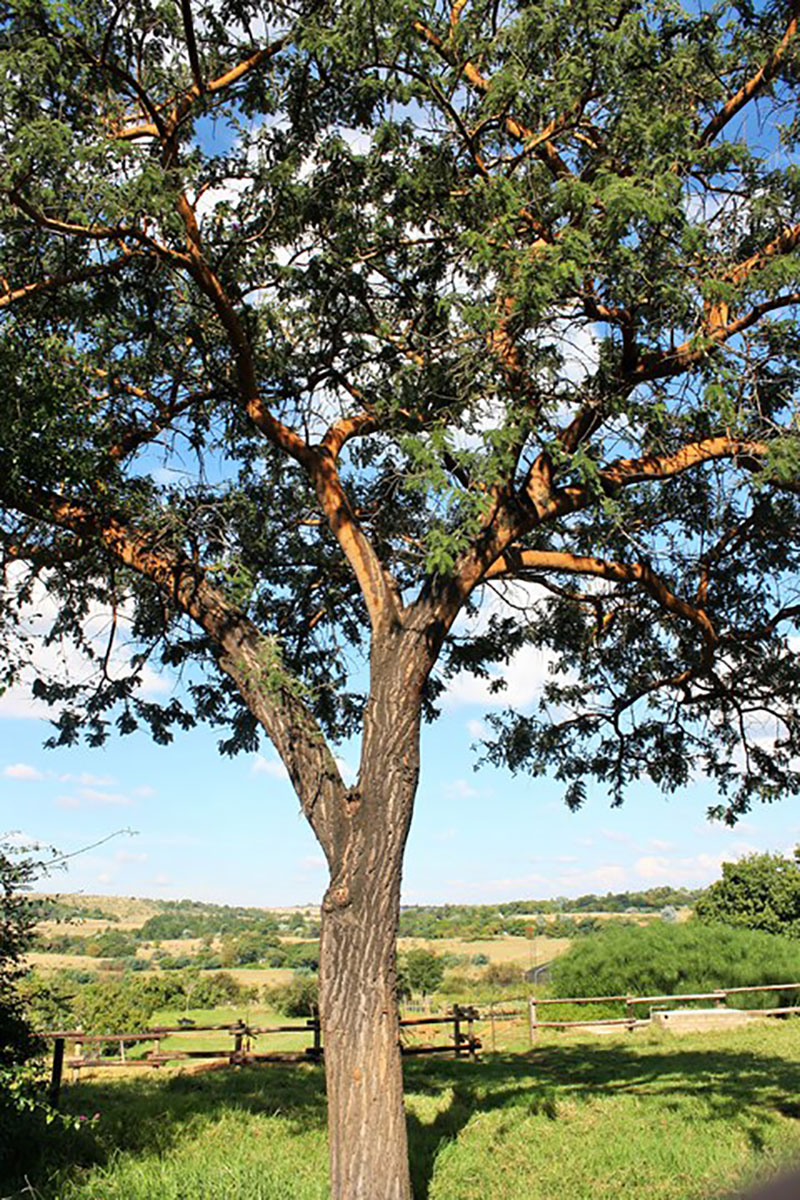
Silky thorn / Sydoring
Suitable for medium-sized gardens – the silky thorn with red bark on the young stems glows in the sunlight while the mature bark has dark brown rough strips with a red background. This beautiful Acacia attracts birds, insects and butterflies besides making a wonderful garden plant.
Botanical Name:
Vachellia rehmanniana
Related products
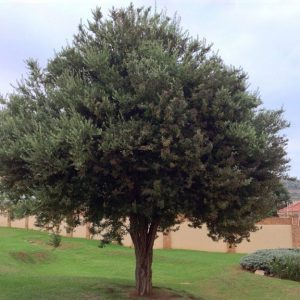
False olive / Vals olyf
False olive / Vals olyfIf you want to attract butterflies, moths and birds to your garden the false olive is the way to go – not only does it provide food for wildlife it is also a sweetly scented and beautiful tree.
Botanical Name:
Buddleija saligna
Did you know?
False olive makes good fuel wood as it burns with an intense heat.
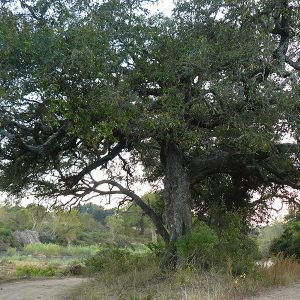
Jackalberry / Jakkalsbessie
Jackalberry / JakkalsbessieA medium-sized tall, upright tree with a dense canopy. The bark is black to grey with a rough texture. They often grow on termite mounds.
Botanical Name:
Diospyros mespiliformis
Did you know?
The jackalberry has a fantastic mutualism and symbiotic network with many living organisms, from human beings to small insects. There is a complex ecological system revolving around this tree. It is one of the savanna giants that can live for more than 200 years.

Knobbly fig / Knoppiesvy
Knobbly fig / KnoppiesvyJust like many of the fig species, the knobbly fig feeds a variety of animals and has a beautiful growth form. It may grow as an ordinary, stand-alone tree or in a cluster.
Botanical Name:
Ficus sansibarika
Did you know?
The leaves are browsed by elephants, giraffe, kudu and nyala.
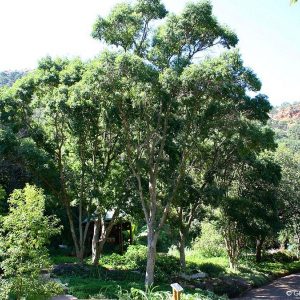
Lavender tree / Laventel boom
Lavender tree / Laventel boomHeteropyxis natalensis is an ideal tree for home gardens – a good focal point. It doesn’t get too big and the root system is non-invasive. The tree is usually multistemmed, the crown is rounded and foliage drooping.
Botanical Name:
Heteropyxis natalensis
Did you know?
A favourite of the black rhino and the leaves are used in potpourrie because of their signature scent.
