

Broomcluster fig / Besemtrosvy

Broomcluster fig / Besemtrosvy
This tree boasts a massive spreading crown. The figs are born in large clusters on the stem of the tree and very often low down close to the ground. Like most figs, it can be found along rivers and other water sources. It provides food for a lot of animals.
Botanical Name:
Ficus sur
Did you know?
Fig jam can be made from the fruits!
Related products
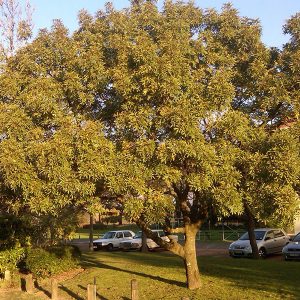
Cape ash / Kaapse essenhout
Cape ash / Kaapse essenhoutThis is a medium to large attractive tree that has been used as a street tree in many towns and cities of South Africa. It is also ideal for spaces where you need to create a canopy in a relatively short space of time. Its crown is rounded and autumn foliage yellow or reddish.
Botanical Name:
Ekebergia capensis
Did you know?
The fruit is enjoyed by an array of game, from all kinds of bird species to bushbuck and baboons.

Cheesewood / Kasuur
Cheesewood / KasuurA small to medium-sized, well-shaped tree with glossy leaves that have a resinous smell when crushed. A beautiful garden tree, which can be grown in sun or semi-shade, and can be used in forest and bush clumps as well as being used as a hedge plant. It’s a wonderful shade tree, and with its non-aggressive root system it’s ideal for small gardens and containers.
Botanical Name:
Pittosporum viridiflorum
Did you know?
Many birds, including the Red-eyed Dove and several starlings eat the seeds. Goats and game (Kudu, Nyala, and Bushbuck) browse the leaves.
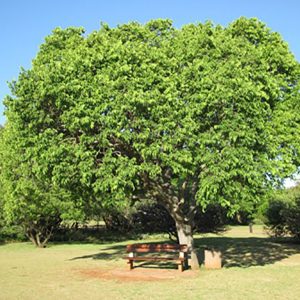
White stinkwood / Wit stinkhout
White stinkwood / Wit stinkhoutAn ideal garden tree – the white stinkwood usually has a single trunk and broadly upright to rounded crown. When planted on the northern or western side of the house, the shade provided cools the house in summer yet allows the sun through to heat up the house in winter.
Botanical Name:
Celtis africana
Did you know?
When freshy cut, the wood has an unpleasant smell, hence the common names “stinkwood”.

Red ivory / Rooi ivoor
Red ivory / Rooi ivoorThis medium-sized and neatly shaped tree normally grows in groups with other trees and is very attractive to birds. The leaves are glossy dark green above and pale green below. It’s generally a smaller tree than the berchemia discolor with smaller leaves and reddish fruit.
Botanical Name:
Berchemia zeyheri
Did you know?
The delicious fruits are eaten fresh. They may be stored in containers and the sticky sweet mass may still be edible after several months.
