

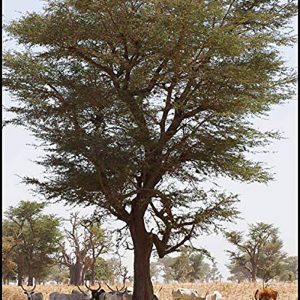
Anna tree / Anna boom
Anna tree / Anna boomA fast-growing tree with a greenish grey to whitish bark. The foliage is also green to grey in colour. Interestingly enough, the Anna tree loses its thorns when it matures into an adult tree – making it a good garden tree!
Botanical Name:
Faidherbia albeda
Did you know?
The pods are an important source of food to livestock and game in the ry season.
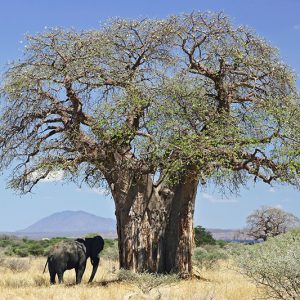
Baobab / Kremetart
Baobab / KremetartThis large tree is probably one of Africa’s most symbolic trees. The baobab is well known throughout the world for its unique form and often gigantic proportions.
Botanical Name:
Adansonia digitata
Did you know?
The baobab is regarded as the largest succulent plant in the world.
Black monkey thorn / Swartapies doring
Black monkey thorn / Swartapies doring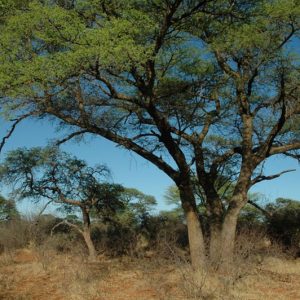
Black monkey thorn / Swartapies doring
Black monkey thorn / Swartapies doringA wonderful feature tree for the larger garden. It forms a dense shade, making it a useful addition to a car park.
Botanical Name:
Senegalia burkei
Did you know?
The leaves are eaten by black rhino, giraffe, kudu, nyala and impala.
Buffalo thorn / Blikblaar wag-n-bietjie
Buffalo thorn / Blikblaar wag-n-bietjie
Buffalo thorn / Blikblaar wag-n-bietjie
Buffalo thorn / Blikblaar wag-n-bietjieit makes a pleasant shade tree and gives life to the garden by luring birds and insects such as butterflies, beetles and bees. In Botswana as well as most parts of South Africa, the residents believed the buffalo thorn to be immune against lightning, anyone standing under one in a storm would be safe. It is also believed that if it is felled in summer, a drought, hail or lightning will certainly follow.
Botanical Name:
Ziziphus mucronata
Did you know?
Ziziphus mucronata, or as it is more frequently known, the wag-‘n-bietjie tree is said to represent life as we know it. The young twigs are zigzag, indicating that life is not always straightforward. Two thorns at the nodes are also significant; one facing backward represents where we come from and one facing forward, represents where we are going.

Coral tree / Koraal
Coral tree / KoraalA medium-sized tree with beautiful deep orange to scarlet colour flowers and a spreading, rounded crown. It is not just a decorative tree, it also provides food for a whole host of animals. The tree flowers in winter when animals need food the most.
Botanical Name:
Erythrina lysistemon
Did you know?
Also known by many as the “Lucky bean” tree due to its beautiful red seeds.
False buffalo thorn / Vals buffeldoring
False buffalo thorn / Vals buffeldoring
False buffalo thorn / Vals buffeldoring
False buffalo thorn / Vals buffeldoringA thornless, upright tree with dark green leaves. Flocks of birds are attracted by the yellow berries, which ripen at the end of summer. The tree can also be used as a windbreaker.
Botanical Name:
Ziziphus rivularis
Did you know?
Ziziphus mucronata, or as it is more frequently known, the wag-‘n-bietjie tree is said to represent life as we know it. The young twigs are zigzag, indicating that life is not always straightforward. Two thorns at the nodes are also significant; one facing backward represents where we come from and one facing forward, represents where we are going.
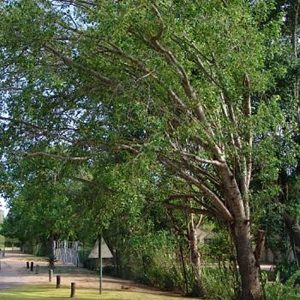
False marula / Vals maroela
False marula / Vals maroelaThis small to medium-sized tree with its small, creamy white to yellow flowers and aromatic leaves, will not only attract birds to your garden, but can be very successfully grown as a bonsai specimen. The trunk is straigh tand erect with a rounded or dome-shaped crown. The leaves are pale green with the tips abruptly but broadly tapering.
Botanical Name:
Lannea sweinfurthii
Did you know?
The false marula tree is economically important in South Africa. It is very successfully used to feed cattle and game. The cattle eat the fresh or dry leaves and this reduces the expenses on fodder by farmers who are growing these trees.
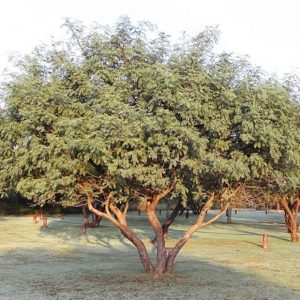
Hook-thorn / Haakdoring
Hook-thorn / HaakdoringThis beautiful tree is the most common naturally occurring senegalia in the Witwatersrand National Botanical Garden. It has an irregular, spreading crown. One of the most attractive features of the tree is the foliage which is bright green and feathery looking. The leaves are drooping which gives the canopy a lovely soft look.
Botanical Name:
Senegalia caffra
Did you know?
The common hook-thorn is used traditionally for many purposes such as fencing posts, tanning and the beautiful rootwood is highly valued by Xhosa women for tobacco pipes.
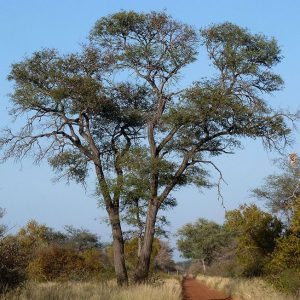
Knob thorn / Knoppiesdoring
Knob thorn / KnoppiesdoringThe knob thorn is an attractive garden tree which grows into a lovely shade tree. It has a long cylindrical shape and rounded crown. It has knobs on the trunks and on branches with persistent thorns arising on the knobs.
Botanical Name:
Senegalia nigrescens
Did you know?
The knob thorn is termite-resistant and the flowers are a dietary component for giraffes.

Marula / Maroela
Marula / MaroelaThe edible fruits and the multiple uses associated with almost all parts of the marula, make it one of southern Africa’s most valued trees.
Botanical Name:
Sclerocaraya birrea
Did you know?
The Marula is a firm favourite for elephants, who delight in the fruit and the nutritious bark. Luckliy an elephant would have to eat hundreds and hundreds of fermented marula fruits in order to ingest the same equivalent of alcohol as a few beers for a grown man.

Pod-mahogany / Peulmahonie
Pod-mahogany / PeulmahonieA very attractive medium-sized tree with a short trunk and widespreading crown. The glossy dark green leaves turn ino an attractive yellowish colour in the Autumn months.
Botanical Name:
Afzelia quanzensis
Did you know?
The light red-brown wood of the pod mahogany is hard and has a good grain. It has been used for building, making plywood, furniture, panelling and for flooring. Traditionally the wood is used for making dugout canoes and grain stamping mortars.
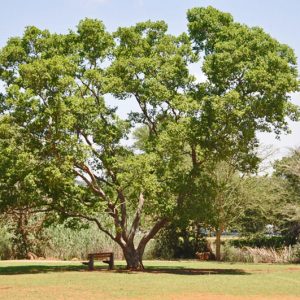
River bushwillow / Vaderlandswilg
River bushwillow / VaderlandswilgThe river bushwillow is often multi-stemmed and somewhat willow-like in habit. It boasts a beautiful form which is just as magical in autumn. Nowadays it is often grown as a street tree and also in gardens for ornament and shade.
Botanical Name:
Combretum erythrophyllum
Did you know?
Roots are used to treat venereal diseases and also as purgatives. Dried, powdered gum may be applied to sores.

Silver clusterleaf / Vaalboom
Silver clusterleaf / VaalboomThe silver clusterleaf has a spreading crown with horizontal branches. The bark is grey and deeply fissured. The grey-green leaves are clustered at branch ends and are covered in shiny, silvery hairs, making the whole tree look silvery from a distance.
Botanical Name:
Terminalia sericea
Did you know?
Terminalia sericea is important in traditional medicine. The leaves and roots are boiled in water and the infusion is taken orally for the treatment of coughs, diarrhoea and stomach ache. The leaves can be used as an antibiotic for wounds. In the case of bleeding, a paste can be made by cooking the leaves in water and placing them on the wounds.

Snuffbox tree / Snuifkalbassie
Snuffbox tree / SnuifkalbassieThis spiny shrub or small tree with pretty white flowers is known for the snuff boxes that can be made from its hard-shelled fruit. An ideal barrier plant.
Botanical Name:
Oncoba spinosa
Did you know?
Flowers somewhat resemble a fried egg and in Zimbabwe it is called the fried-egg flower.

Toad tree / Padda boom
Toad tree / Padda boomA beautiful bushveld tree that can be recognised by its large, glossy leaves, fragrant white flowers and large fruit borne in pairs. With its unusual fruits it is excellent for gardeners wanting to bring nature back into their garden ? it attracts birds, insects and small mammals.
Botanical Name:
Tabernaemontana elegans
Did you know?
The seeds are burnt, grounded to a powder and mixed with tobacco for chewing or smoking by the Zulu people.

Tree wisteria /Vanwykshout
Tree wisteria /VanwykshoutOne of the most spectacular flowering trees – the tree wisteria is known for its clusters of bright purple flowers. It has an upright crown and drooping foliage. A very colourful ornamental and shade tree.
Botanical Name:
Bolusanthus speciosus
Did you know?
The wood is heavy, durable and suitable for fence posts, and furniture.
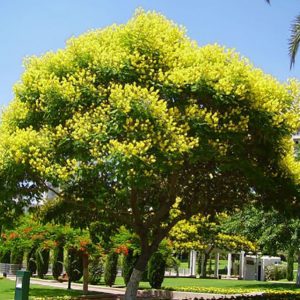
Weepingwattle / Huilboom
Weepingwattle / HuilboomThe weepingwattle has acacia-like foliage and showy yellow flowers. It’s an excellent tree for bee-keepers. It has a spreading untidy canopy and makes a good shade tree for both livestock and humans.
Botanical Name:
Peltohorum africanum
Did you know?
Young leaves and pods are eaten by livestock and the flowers provide a high yield of nectar and pollen for bee-keeping.
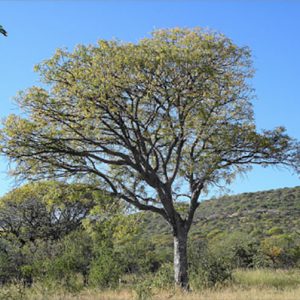
White seringa / Wit sering
White seringa / Wit seringThis is a straight-stemmed tree with a fine, round , leafy crown. It is a good choice for those gardeners who prefer something different. It grows in the bushveld and lowveld of Gauteng in deep, sandy soil or on rocky hills. White seringa can tolerate drought, but it is sensitive to frost, making it a better choice for warmer gardens. It has beautiful autumn foliage.
Botanical Name:
Kirkii accuminata
Did you know?
In Gauteng, white seringa is planted around enclosures for livestock (kraals).
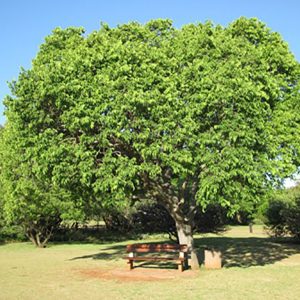
White stinkwood / Wit stinkhout
White stinkwood / Wit stinkhoutAn ideal garden tree – the white stinkwood usually has a single trunk and broadly upright to rounded crown. When planted on the northern or western side of the house, the shade provided cools the house in summer yet allows the sun through to heat up the house in winter.
Botanical Name:
Celtis africana
Did you know?
When freshy cut, the wood has an unpleasant smell, hence the common names “stinkwood”.
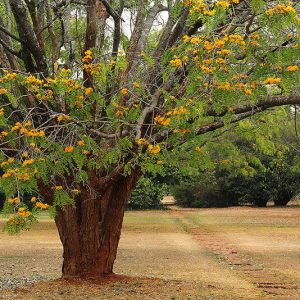
Wild mango / Wilde mango
Wild mango / Wilde mangoThis is a tall tree with a flat-topped, widespreading crown. The yellowish-orange flowers resemble an old fashioned powder puff. Elephants love the fruit!
Botanical Name:
Cordylia africana
Did you know?
Did you know that Africa has its own mango? Although the fruit is not as big and tasty as the exotic one and it belongs to a different family, it is extremely rich in vitamin C.
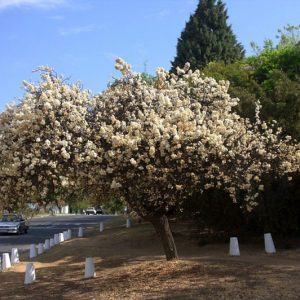
Wild pear / Drolpeer
Wild pear / DrolpeerThe wild pear is a lovely garden specimen, and the spectacular show of scented flowers is a herald of spring. It has a single stem and a somewhat rounded crown. It is both frost and drought resistant.
Botanical Name:
Dombeya rotundifolia
Did you know?
Strong rope can be made from the fibrous inner bark.
