

Weepingwattle / Huilboom

Weepingwattle / Huilboom
The weepingwattle has acacia-like foliage and showy yellow flowers. It’s an excellent tree for bee-keepers. It has a spreading untidy canopy and makes a good shade tree for both livestock and humans.
Botanical Name:
Peltohorum africanum
Did you know?
Young leaves and pods are eaten by livestock and the flowers provide a high yield of nectar and pollen for bee-keeping.
Related products
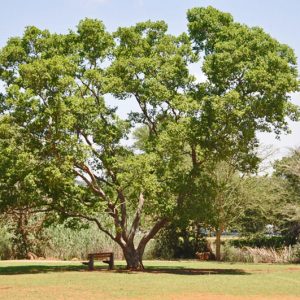
River bushwillow / Vaderlandswilg
River bushwillow / VaderlandswilgThe river bushwillow is often multi-stemmed and somewhat willow-like in habit. It boasts a beautiful form which is just as magical in autumn. Nowadays it is often grown as a street tree and also in gardens for ornament and shade.
Botanical Name:
Combretum erythrophyllum
Did you know?
Roots are used to treat venereal diseases and also as purgatives. Dried, powdered gum may be applied to sores.
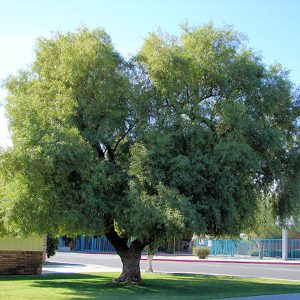
Karee / Karee
Karee / KareeThe karee is a small- to medium-sized tree with a willow-like appearance due to its drooping habit. It’s not just an excellet shade tree, but also a great street tree. It can also be planted in parks or office complexes.
Botanical Name:
Searsia lancea
Did you know?
Searsia lancea is useful in providing natural soil stabilisation and increasing infiltration of rainwater into the soil, thus reducing erosion and raising the ground watertable.
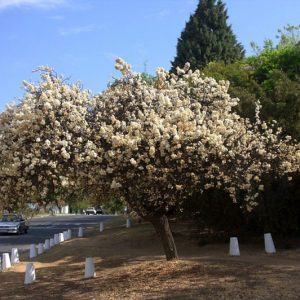
Wild pear / Drolpeer
Wild pear / DrolpeerThe wild pear is a lovely garden specimen, and the spectacular show of scented flowers is a herald of spring. It has a single stem and a somewhat rounded crown. It is both frost and drought resistant.
Botanical Name:
Dombeya rotundifolia
Did you know?
Strong rope can be made from the fibrous inner bark.

Coral tree / Koraal
Coral tree / KoraalA medium-sized tree with beautiful deep orange to scarlet colour flowers and a spreading, rounded crown. It is not just a decorative tree, it also provides food for a whole host of animals. The tree flowers in winter when animals need food the most.
Botanical Name:
Erythrina lysistemon
Did you know?
Also known by many as the “Lucky bean” tree due to its beautiful red seeds.
