

Marula / Maroela
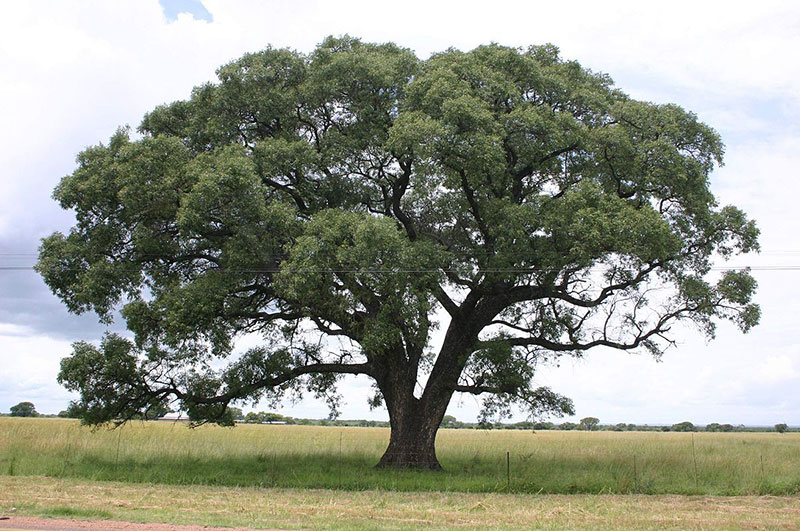
Marula / Maroela
The edible fruits and the multiple uses associated with almost all parts of the marula, make it one of southern Africa’s most valued trees.
Botanical Name:
Sclerocaraya birrea
Did you know?
The Marula is a firm favourite for elephants, who delight in the fruit and the nutritious bark. Luckliy an elephant would have to eat hundreds and hundreds of fermented marula fruits in order to ingest the same equivalent of alcohol as a few beers for a grown man.
Related products
False buffalo thorn / Vals buffeldoring
False buffalo thorn / Vals buffeldoring
False buffalo thorn / Vals buffeldoring
False buffalo thorn / Vals buffeldoringA thornless, upright tree with dark green leaves. Flocks of birds are attracted by the yellow berries, which ripen at the end of summer. The tree can also be used as a windbreaker.
Botanical Name:
Ziziphus rivularis
Did you know?
Ziziphus mucronata, or as it is more frequently known, the wag-‘n-bietjie tree is said to represent life as we know it. The young twigs are zigzag, indicating that life is not always straightforward. Two thorns at the nodes are also significant; one facing backward represents where we come from and one facing forward, represents where we are going.
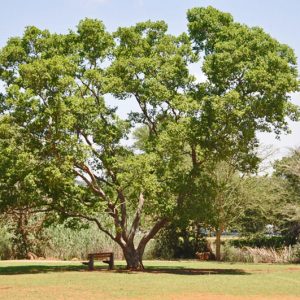
River bushwillow / Vaderlandswilg
River bushwillow / VaderlandswilgThe river bushwillow is often multi-stemmed and somewhat willow-like in habit. It boasts a beautiful form which is just as magical in autumn. Nowadays it is often grown as a street tree and also in gardens for ornament and shade.
Botanical Name:
Combretum erythrophyllum
Did you know?
Roots are used to treat venereal diseases and also as purgatives. Dried, powdered gum may be applied to sores.
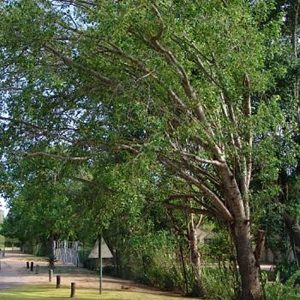
False marula / Vals maroela
False marula / Vals maroelaThis small to medium-sized tree with its small, creamy white to yellow flowers and aromatic leaves, will not only attract birds to your garden, but can be very successfully grown as a bonsai specimen. The trunk is straigh tand erect with a rounded or dome-shaped crown. The leaves are pale green with the tips abruptly but broadly tapering.
Botanical Name:
Lannea sweinfurthii
Did you know?
The false marula tree is economically important in South Africa. It is very successfully used to feed cattle and game. The cattle eat the fresh or dry leaves and this reduces the expenses on fodder by farmers who are growing these trees.
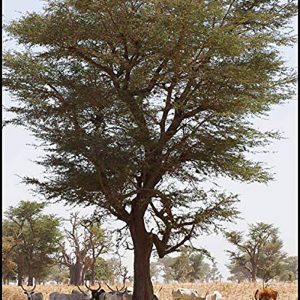
Anna tree / Anna boom
Anna tree / Anna boomA fast-growing tree with a greenish grey to whitish bark. The foliage is also green to grey in colour. Interestingly enough, the Anna tree loses its thorns when it matures into an adult tree – making it a good garden tree!
Botanical Name:
Faidherbia albeda
Did you know?
The pods are an important source of food to livestock and game in the ry season.
