

Baobab / Kremetart

Baobab / Kremetart
This large tree is probably one of Africa’s most symbolic trees. The baobab is well known throughout the world for its unique form and often gigantic proportions.
Botanical Name:
Adansonia digitata
Did you know?
The baobab is regarded as the largest succulent plant in the world.
Related products

Tree wisteria /Vanwykshout
Tree wisteria /VanwykshoutOne of the most spectacular flowering trees – the tree wisteria is known for its clusters of bright purple flowers. It has an upright crown and drooping foliage. A very colourful ornamental and shade tree.
Botanical Name:
Bolusanthus speciosus
Did you know?
The wood is heavy, durable and suitable for fence posts, and furniture.
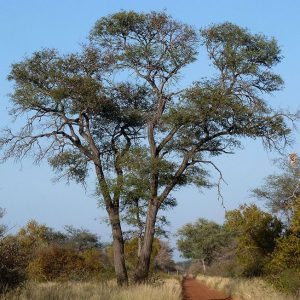
Knob thorn / Knoppiesdoring
Knob thorn / KnoppiesdoringThe knob thorn is an attractive garden tree which grows into a lovely shade tree. It has a long cylindrical shape and rounded crown. It has knobs on the trunks and on branches with persistent thorns arising on the knobs.
Botanical Name:
Senegalia nigrescens
Did you know?
The knob thorn is termite-resistant and the flowers are a dietary component for giraffes.
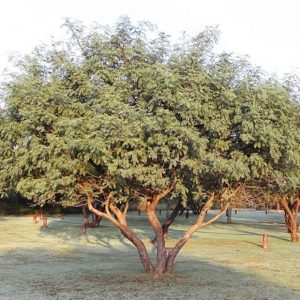
Hook-thorn / Haakdoring
Hook-thorn / HaakdoringThis beautiful tree is the most common naturally occurring senegalia in the Witwatersrand National Botanical Garden. It has an irregular, spreading crown. One of the most attractive features of the tree is the foliage which is bright green and feathery looking. The leaves are drooping which gives the canopy a lovely soft look.
Botanical Name:
Senegalia caffra
Did you know?
The common hook-thorn is used traditionally for many purposes such as fencing posts, tanning and the beautiful rootwood is highly valued by Xhosa women for tobacco pipes.
Buffalo thorn / Blikblaar wag-n-bietjie
Buffalo thorn / Blikblaar wag-n-bietjie
Buffalo thorn / Blikblaar wag-n-bietjie
Buffalo thorn / Blikblaar wag-n-bietjieit makes a pleasant shade tree and gives life to the garden by luring birds and insects such as butterflies, beetles and bees. In Botswana as well as most parts of South Africa, the residents believed the buffalo thorn to be immune against lightning, anyone standing under one in a storm would be safe. It is also believed that if it is felled in summer, a drought, hail or lightning will certainly follow.
Botanical Name:
Ziziphus mucronata
Did you know?
Ziziphus mucronata, or as it is more frequently known, the wag-‘n-bietjie tree is said to represent life as we know it. The young twigs are zigzag, indicating that life is not always straightforward. Two thorns at the nodes are also significant; one facing backward represents where we come from and one facing forward, represents where we are going.
