

Wild olive / Wilde olyf

Wild olive / Wilde olyf
The wild olive is neatly shaped with grey-green to dark-green leaves above and greyish below. This tree is an asset on farms and game farms, especially in very dry areas because it is extremely hardy and is an excellent fodder tree.
Botanical Name:
Olea sub. Africana
Did you know?
The flowers attract a host of insects. The abundant supply of nectar makes it a good honey tree.
Related products
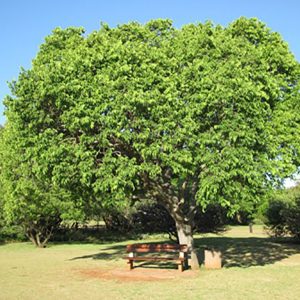
White stinkwood / Wit stinkhout
White stinkwood / Wit stinkhoutAn ideal garden tree – the white stinkwood usually has a single trunk and broadly upright to rounded crown. When planted on the northern or western side of the house, the shade provided cools the house in summer yet allows the sun through to heat up the house in winter.
Botanical Name:
Celtis africana
Did you know?
When freshy cut, the wood has an unpleasant smell, hence the common names “stinkwood”.

Coral tree / Koraal
Coral tree / KoraalA medium-sized tree with beautiful deep orange to scarlet colour flowers and a spreading, rounded crown. It is not just a decorative tree, it also provides food for a whole host of animals. The tree flowers in winter when animals need food the most.
Botanical Name:
Erythrina lysistemon
Did you know?
Also known by many as the “Lucky bean” tree due to its beautiful red seeds.
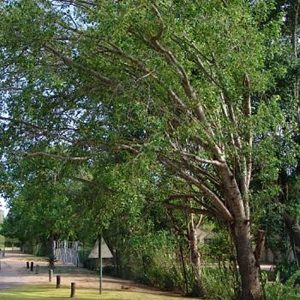
False marula / Vals maroela
False marula / Vals maroelaThis small to medium-sized tree with its small, creamy white to yellow flowers and aromatic leaves, will not only attract birds to your garden, but can be very successfully grown as a bonsai specimen. The trunk is straigh tand erect with a rounded or dome-shaped crown. The leaves are pale green with the tips abruptly but broadly tapering.
Botanical Name:
Lannea sweinfurthii
Did you know?
The false marula tree is economically important in South Africa. It is very successfully used to feed cattle and game. The cattle eat the fresh or dry leaves and this reduces the expenses on fodder by farmers who are growing these trees.
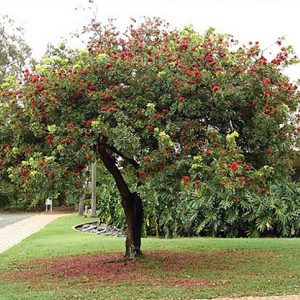
Weepingboerbean / Huilboerboon
Weepingboerbean / HuilboerboonA handsome tree with a wide-spreading, rounded crown, and bright red, nectar-filled flowers in spring and early summer that attract many birds and insects. It is easy to grow and makes a good shade tree or specimen tree.
Botanical Name:
Schotia brachypetala
Did you know?
Not only is Schotia brachypetala an exceptional ornamental tree, it also has a number of other uses: A decoction of the bark is taken to treat heartburn and hangovers.
