

Forest natal mahogany / Bosrooiesenhout
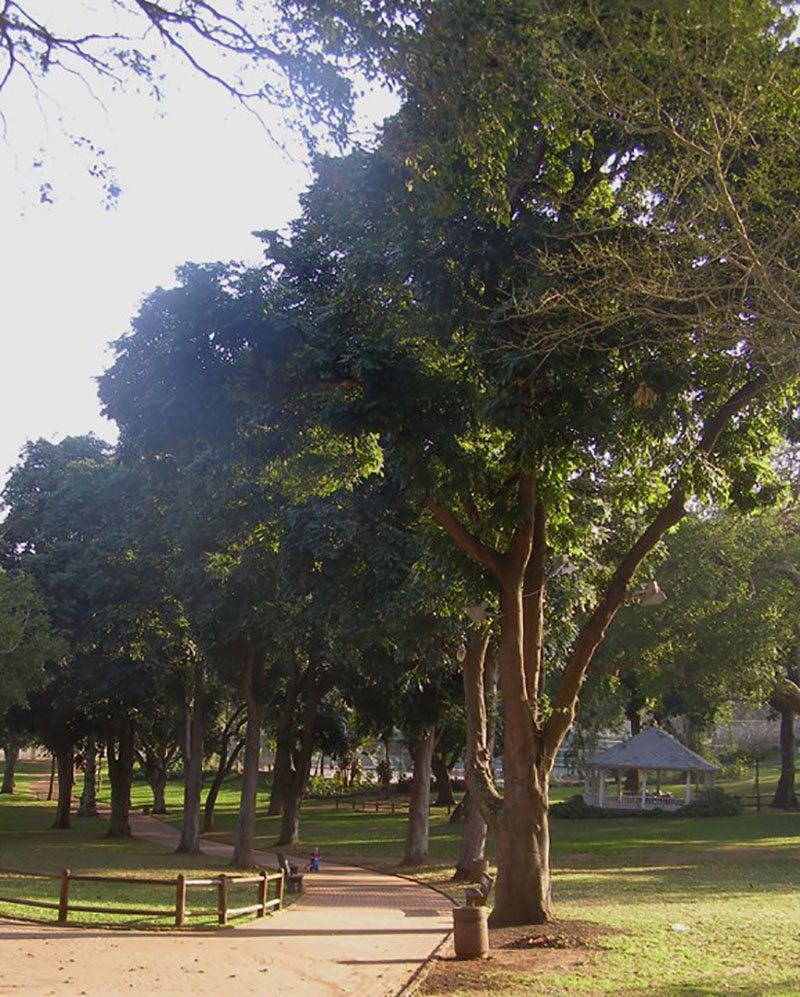
Forest natal mahogany / Bosrooiesenhout
Trichilia dregeana is a lovely large tree that inhabits evergreen forests in high rainfall areas. It is a highly ornamental species with considerable cultural and ecological value to match.
Botanical Name:
Trichelia dregeana
Did you know?
The tree provides suitable nesting sites for a number of bird species.
Related products

Apple leaf / Appelblaar
Apple leaf / AppelblaarThe Apple leaf is a medium- to large-sized tree with a wide-spreading, dense and rounded crown. The main stem is tall, straight and bare, occasionally bent and twisted.
Botanical Name:
Philenoptera violacea
Did you know?
The wood of this attractive tree makes a stunning ornamental display.
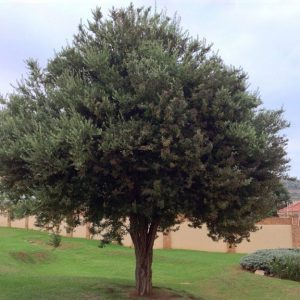
False olive / Vals olyf
False olive / Vals olyfIf you want to attract butterflies, moths and birds to your garden the false olive is the way to go – not only does it provide food for wildlife it is also a sweetly scented and beautiful tree.
Botanical Name:
Buddleija saligna
Did you know?
False olive makes good fuel wood as it burns with an intense heat.

Cheesewood / Kasuur
Cheesewood / KasuurA small to medium-sized, well-shaped tree with glossy leaves that have a resinous smell when crushed. A beautiful garden tree, which can be grown in sun or semi-shade, and can be used in forest and bush clumps as well as being used as a hedge plant. It’s a wonderful shade tree, and with its non-aggressive root system it’s ideal for small gardens and containers.
Botanical Name:
Pittosporum viridiflorum
Did you know?
Many birds, including the Red-eyed Dove and several starlings eat the seeds. Goats and game (Kudu, Nyala, and Bushbuck) browse the leaves.
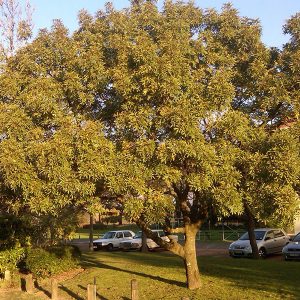
Cape ash / Kaapse essenhout
Cape ash / Kaapse essenhoutThis is a medium to large attractive tree that has been used as a street tree in many towns and cities of South Africa. It is also ideal for spaces where you need to create a canopy in a relatively short space of time. Its crown is rounded and autumn foliage yellow or reddish.
Botanical Name:
Ekebergia capensis
Did you know?
The fruit is enjoyed by an array of game, from all kinds of bird species to bushbuck and baboons.
