

Black monkey thorn / Swartapies doring

Black monkey thorn / Swartapies doring
A wonderful feature tree for the larger garden. It forms a dense shade, making it a useful addition to a car park.
Botanical Name:
Senegalia burkei
Did you know?
The leaves are eaten by black rhino, giraffe, kudu, nyala and impala.
Related products
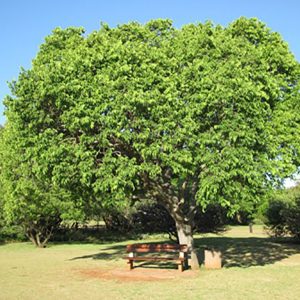
White stinkwood / Wit stinkhout
White stinkwood / Wit stinkhoutAn ideal garden tree – the white stinkwood usually has a single trunk and broadly upright to rounded crown. When planted on the northern or western side of the house, the shade provided cools the house in summer yet allows the sun through to heat up the house in winter.
Botanical Name:
Celtis africana
Did you know?
When freshy cut, the wood has an unpleasant smell, hence the common names “stinkwood”.
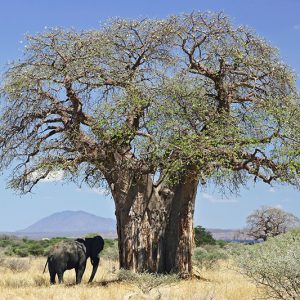
Baobab / Kremetart
Baobab / KremetartThis large tree is probably one of Africa’s most symbolic trees. The baobab is well known throughout the world for its unique form and often gigantic proportions.
Botanical Name:
Adansonia digitata
Did you know?
The baobab is regarded as the largest succulent plant in the world.

Toad tree / Padda boom
Toad tree / Padda boomA beautiful bushveld tree that can be recognised by its large, glossy leaves, fragrant white flowers and large fruit borne in pairs. With its unusual fruits it is excellent for gardeners wanting to bring nature back into their garden ? it attracts birds, insects and small mammals.
Botanical Name:
Tabernaemontana elegans
Did you know?
The seeds are burnt, grounded to a powder and mixed with tobacco for chewing or smoking by the Zulu people.
Buffalo thorn / Blikblaar wag-n-bietjie
Buffalo thorn / Blikblaar wag-n-bietjie
Buffalo thorn / Blikblaar wag-n-bietjie
Buffalo thorn / Blikblaar wag-n-bietjieit makes a pleasant shade tree and gives life to the garden by luring birds and insects such as butterflies, beetles and bees. In Botswana as well as most parts of South Africa, the residents believed the buffalo thorn to be immune against lightning, anyone standing under one in a storm would be safe. It is also believed that if it is felled in summer, a drought, hail or lightning will certainly follow.
Botanical Name:
Ziziphus mucronata
Did you know?
Ziziphus mucronata, or as it is more frequently known, the wag-‘n-bietjie tree is said to represent life as we know it. The young twigs are zigzag, indicating that life is not always straightforward. Two thorns at the nodes are also significant; one facing backward represents where we come from and one facing forward, represents where we are going.
