

Apple leaf / Appelblaar

Apple leaf / Appelblaar
The Apple leaf is a medium- to large-sized tree with a wide-spreading, dense and rounded crown. The main stem is tall, straight and bare, occasionally bent and twisted.
Botanical Name:
Philenoptera violacea
Did you know?
The wood of this attractive tree makes a stunning ornamental display.
Related products
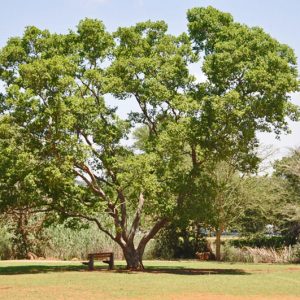
River bushwillow / Vaderlandswilg
River bushwillow / VaderlandswilgThe river bushwillow is often multi-stemmed and somewhat willow-like in habit. It boasts a beautiful form which is just as magical in autumn. Nowadays it is often grown as a street tree and also in gardens for ornament and shade.
Botanical Name:
Combretum erythrophyllum
Did you know?
Roots are used to treat venereal diseases and also as purgatives. Dried, powdered gum may be applied to sores.
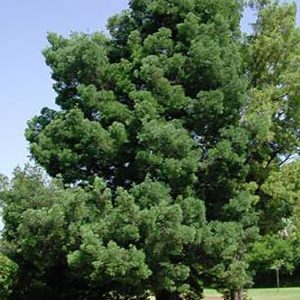
Outeniqua yellowwood / Geelhout
Outeniqua yellowwood / GeelhoutThis fast-growing, majestic yellowwood with its elegant shape is certainly a tree for all seasons and all gardens. It is an excellent container plant and can also be decorated and used as an indoor Christmas tree.
Botanical Name:
Podocarpus falcatus
Did you know?
Podocarpus falcatus could make an ideal indigenous substitute for the exotic pine trees currently being used in plantations. Trials done at a forest station at Magoebaskloof showed that the yield is similar, with the growth rate and quality of the wood comparing favourably to that of commercial pine.

Broomcluster fig / Besemtrosvy
Broomcluster fig / BesemtrosvyThis tree boasts a massive spreading crown. The figs are born in large clusters on the stem of the tree and very often low down close to the ground. Like most figs, it can be found along rivers and other water sources. It provides food for a lot of animals.
Botanical Name:
Ficus sur
Did you know?
Fig jam can be made from the fruits!
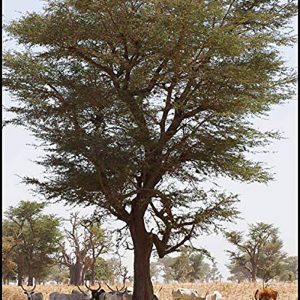
Anna tree / Anna boom
Anna tree / Anna boomA fast-growing tree with a greenish grey to whitish bark. The foliage is also green to grey in colour. Interestingly enough, the Anna tree loses its thorns when it matures into an adult tree – making it a good garden tree!
Botanical Name:
Faidherbia albeda
Did you know?
The pods are an important source of food to livestock and game in the ry season.
