

Paperbark / Papierbas

Paperbark / Papierbas
Pure stands of these beautifully shaped trees with their perfectly flattened crowns are quite stunning. Where else but in Africa would you encounter such a sight?
Botanical Name:
Vachellia sieberiana woodii
Did you know?
It is a favoured nesting tree for Barbets. The Green Wood Hoopoe love probing under the yellow, papery, flaking bark for insects.
Related products
Black monkey thorn / Swartapies doring
Black monkey thorn / Swartapies doring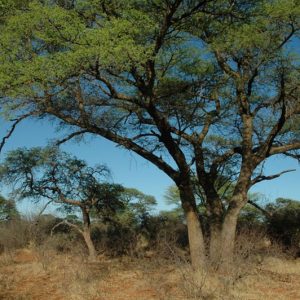
Black monkey thorn / Swartapies doring
Black monkey thorn / Swartapies doringA wonderful feature tree for the larger garden. It forms a dense shade, making it a useful addition to a car park.
Botanical Name:
Senegalia burkei
Did you know?
The leaves are eaten by black rhino, giraffe, kudu, nyala and impala.
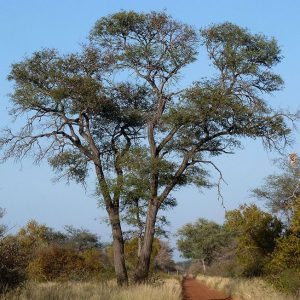
Knob thorn / Knoppiesdoring
Knob thorn / KnoppiesdoringThe knob thorn is an attractive garden tree which grows into a lovely shade tree. It has a long cylindrical shape and rounded crown. It has knobs on the trunks and on branches with persistent thorns arising on the knobs.
Botanical Name:
Senegalia nigrescens
Did you know?
The knob thorn is termite-resistant and the flowers are a dietary component for giraffes.
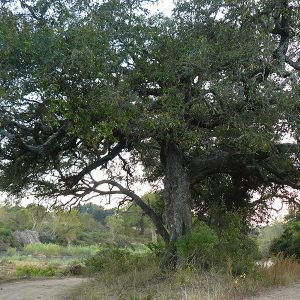
Jackalberry / Jakkalsbessie
Jackalberry / JakkalsbessieA medium-sized tall, upright tree with a dense canopy. The bark is black to grey with a rough texture. They often grow on termite mounds.
Botanical Name:
Diospyros mespiliformis
Did you know?
The jackalberry has a fantastic mutualism and symbiotic network with many living organisms, from human beings to small insects. There is a complex ecological system revolving around this tree. It is one of the savanna giants that can live for more than 200 years.
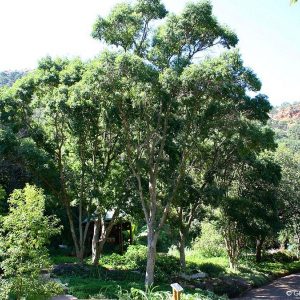
Lavender tree / Laventel boom
Lavender tree / Laventel boomHeteropyxis natalensis is an ideal tree for home gardens – a good focal point. It doesn’t get too big and the root system is non-invasive. The tree is usually multistemmed, the crown is rounded and foliage drooping.
Botanical Name:
Heteropyxis natalensis
Did you know?
A favourite of the black rhino and the leaves are used in potpourrie because of their signature scent.
