

Lavender tree / Laventel boom

Lavender tree / Laventel boom
Heteropyxis natalensis is an ideal tree for home gardens – a good focal point. It doesn’t get too big and the root system is non-invasive. The tree is usually multistemmed, the crown is rounded and foliage drooping.
Botanical Name:
Heteropyxis natalensis
Did you know?
A favourite of the black rhino and the leaves are used in potpourrie because of their signature scent.
Related products

Knobbly fig / Knoppiesvy
Knobbly fig / KnoppiesvyJust like many of the fig species, the knobbly fig feeds a variety of animals and has a beautiful growth form. It may grow as an ordinary, stand-alone tree or in a cluster.
Botanical Name:
Ficus sansibarika
Did you know?
The leaves are browsed by elephants, giraffe, kudu and nyala.
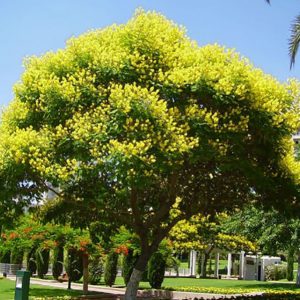
Weepingwattle / Huilboom
Weepingwattle / HuilboomThe weepingwattle has acacia-like foliage and showy yellow flowers. It’s an excellent tree for bee-keepers. It has a spreading untidy canopy and makes a good shade tree for both livestock and humans.
Botanical Name:
Peltohorum africanum
Did you know?
Young leaves and pods are eaten by livestock and the flowers provide a high yield of nectar and pollen for bee-keeping.

Cheesewood / Kasuur
Cheesewood / KasuurA small to medium-sized, well-shaped tree with glossy leaves that have a resinous smell when crushed. A beautiful garden tree, which can be grown in sun or semi-shade, and can be used in forest and bush clumps as well as being used as a hedge plant. It’s a wonderful shade tree, and with its non-aggressive root system it’s ideal for small gardens and containers.
Botanical Name:
Pittosporum viridiflorum
Did you know?
Many birds, including the Red-eyed Dove and several starlings eat the seeds. Goats and game (Kudu, Nyala, and Bushbuck) browse the leaves.

Red ivory / Rooi ivoor
Red ivory / Rooi ivoorThis medium-sized and neatly shaped tree normally grows in groups with other trees and is very attractive to birds. The leaves are glossy dark green above and pale green below. It’s generally a smaller tree than the berchemia discolor with smaller leaves and reddish fruit.
Botanical Name:
Berchemia zeyheri
Did you know?
The delicious fruits are eaten fresh. They may be stored in containers and the sticky sweet mass may still be edible after several months.
