

Waterberry / Waterbessie

Waterberry / Waterbessie
This beautiful tree is home to many birds and insects. The leaves are elliptic to circular, bluish green on top and a paler green below.
Botanical Name:
Syzigium cordatum
Related products
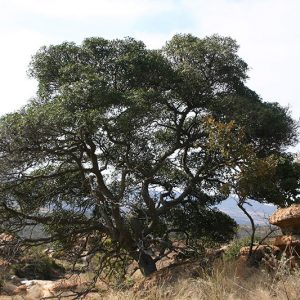
Red milkwood / Moepel
Red milkwood / MoepelA medium sized decorative tree that has a spreading, densely rounded crown. It has the potential to make an excellent evergreen garden specimen for larger gardens, parks and golf courses. This tree casts a deep shade, which offers a cool escape from the hot African sun.
Botanical Name:
Mimusops zeyheri
Did you know?
The Transvaal red milkwood has gained its popularity with people, birds as well as monkeys and baboons through its tasty fruit which are sweet and high in vitamin C.

Cheesewood / Kasuur
Cheesewood / KasuurA small to medium-sized, well-shaped tree with glossy leaves that have a resinous smell when crushed. A beautiful garden tree, which can be grown in sun or semi-shade, and can be used in forest and bush clumps as well as being used as a hedge plant. It’s a wonderful shade tree, and with its non-aggressive root system it’s ideal for small gardens and containers.
Botanical Name:
Pittosporum viridiflorum
Did you know?
Many birds, including the Red-eyed Dove and several starlings eat the seeds. Goats and game (Kudu, Nyala, and Bushbuck) browse the leaves.
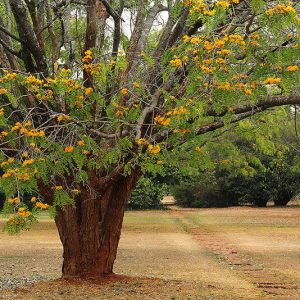
Wild mango / Wilde mango
Wild mango / Wilde mangoThis is a tall tree with a flat-topped, widespreading crown. The yellowish-orange flowers resemble an old fashioned powder puff. Elephants love the fruit!
Botanical Name:
Cordylia africana
Did you know?
Did you know that Africa has its own mango? Although the fruit is not as big and tasty as the exotic one and it belongs to a different family, it is extremely rich in vitamin C.

Tree wisteria /Vanwykshout
Tree wisteria /VanwykshoutOne of the most spectacular flowering trees – the tree wisteria is known for its clusters of bright purple flowers. It has an upright crown and drooping foliage. A very colourful ornamental and shade tree.
Botanical Name:
Bolusanthus speciosus
Did you know?
The wood is heavy, durable and suitable for fence posts, and furniture.
