

Knobbly fig / Knoppiesvy
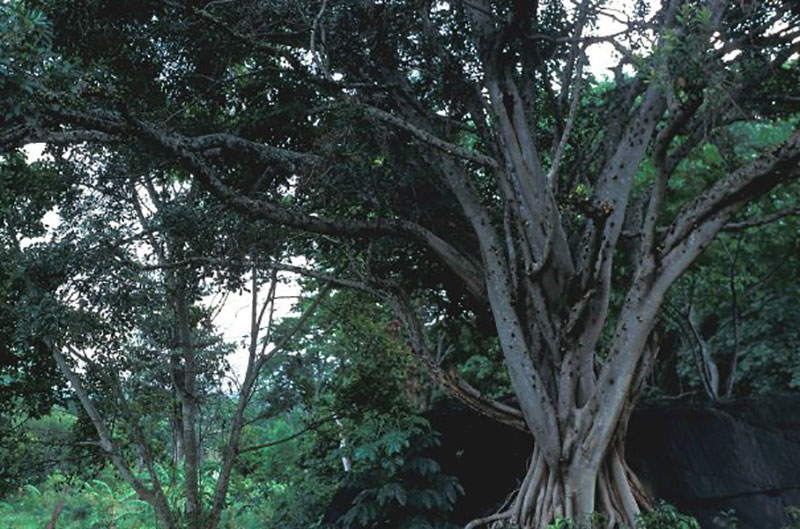
Knobbly fig / Knoppiesvy
Just like many of the fig species, the knobbly fig feeds a variety of animals and has a beautiful growth form. It may grow as an ordinary, stand-alone tree or in a cluster.
Botanical Name:
Ficus sansibarika
Did you know?
The leaves are browsed by elephants, giraffe, kudu and nyala.
Related products
Brown stinkwood / Bruin stinkhout (Mitserie)
Brown stinkwood / Bruin stinkhout (Mitserie)
Brown stinkwood / Bruin stinkhout (Mitserie)
Brown stinkwood / Bruin stinkhout (Mitserie)A perfect garden tree for those who want thick shade in the summer. The trunk is usually single with a rounded or dome-shaped crown and scattered bright red leaves. Mitzeeri’s are also a good tree if one wants to attract birds. In autumn to winter months the leaves turn a brilliant red or orange, making it an attractive tree all year round.
Botanical Name:
Bridelia micrantha
Did you know?
The roots are used to treat stomach complaints and leaf sap is used for sore eyes.

Forest elder / Bosvlier
Forest elder / BosvlierA small tree ideal as a focal point in the garden or it makes a attractive street tree. A lovely dense and rounded crown is often evident, contributing greatly to the visual appeal of the species.
Botanical Name:
Nuxia floribunda
Did you know?
The flowers attract a host of insects. The abundant supply of nectar makes it a good honey tree.
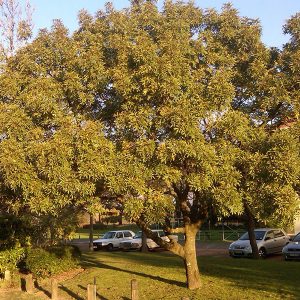
Cape ash / Kaapse essenhout
Cape ash / Kaapse essenhoutThis is a medium to large attractive tree that has been used as a street tree in many towns and cities of South Africa. It is also ideal for spaces where you need to create a canopy in a relatively short space of time. Its crown is rounded and autumn foliage yellow or reddish.
Botanical Name:
Ekebergia capensis
Did you know?
The fruit is enjoyed by an array of game, from all kinds of bird species to bushbuck and baboons.
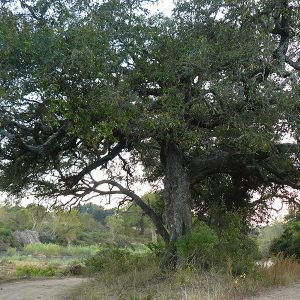
Jackalberry / Jakkalsbessie
Jackalberry / JakkalsbessieA medium-sized tall, upright tree with a dense canopy. The bark is black to grey with a rough texture. They often grow on termite mounds.
Botanical Name:
Diospyros mespiliformis
Did you know?
The jackalberry has a fantastic mutualism and symbiotic network with many living organisms, from human beings to small insects. There is a complex ecological system revolving around this tree. It is one of the savanna giants that can live for more than 200 years.
