

Silky thorn / Sydoring
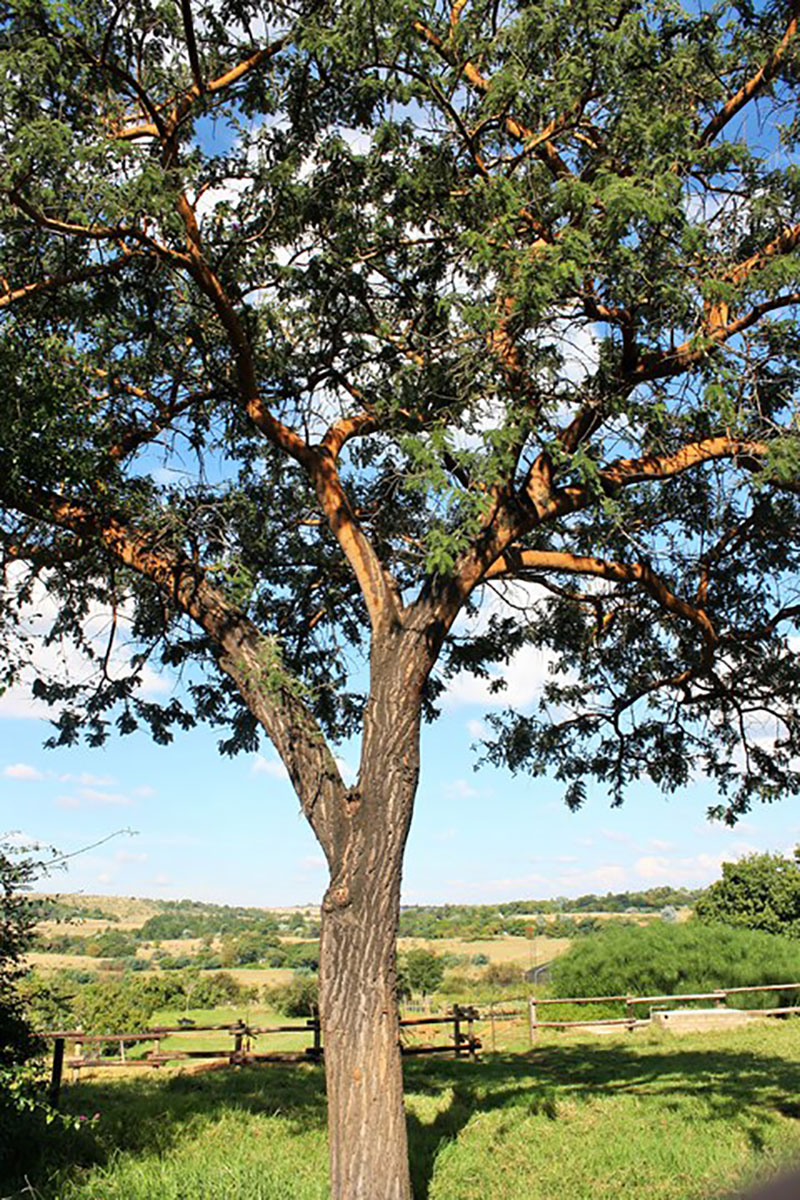
Silky thorn / Sydoring
Suitable for medium-sized gardens – the silky thorn with red bark on the young stems glows in the sunlight while the mature bark has dark brown rough strips with a red background. This beautiful Acacia attracts birds, insects and butterflies besides making a wonderful garden plant.
Botanical Name:
Vachellia rehmanniana
Related products

Flatcrown / Platkroon
Flatcrown / PlatkroonA magnificent tree with an unmistakeable spreading flat crown. The leaves are dark green above, yellowish or rusty velvety below. It’s ideal for providing shade. The flowers are a strikingly white or greenish white during spring.
Botanical Name:
Albizia adianthifolia
Did you know?
In rural areas, seeds are considered edible and are used for making a sauce.

Waterberry / Waterbessie
Waterberry / WaterbessieThis beautiful tree is home to many birds and insects. The leaves are elliptic to circular, bluish green on top and a paler green below.
Botanical Name:
Syzigium cordatum

Sweet thorn / Soetdoring
Sweet thorn / SoetdoringThe sweet thorn makes a beautiful garden specimen. The bright yellow flowers look very striking against the dark green foliage. The rough, dark brown bark is also most attractive. The flowers are sweetly scented and are renowned for attracting insects which are essential to any bird garden.
Botanical Name:
Vachellia karoo
Did you know?
This is one of South Africa’s most beautiful and useful trees. It is integrally part of our country’s history having been used for everything from raft-making to sewing needles and fencing for the houses of the royal Zulu women. The thorns were even used by early naturalists to pin the insects they collected! It is very widespread throughout southern Africa and there are different forms in some places, which can be confusing.
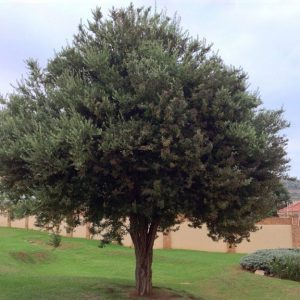
False olive / Vals olyf
False olive / Vals olyfIf you want to attract butterflies, moths and birds to your garden the false olive is the way to go – not only does it provide food for wildlife it is also a sweetly scented and beautiful tree.
Botanical Name:
Buddleija saligna
Did you know?
False olive makes good fuel wood as it burns with an intense heat.
