

Water pear / Water peer

Water pear / Water peer
A lovely medium-sized to large tree with a smooth greyish-white single stem on young trees and beautiful purplish-red young leaves. This handsome tree is grown in gardens for its deep shade.
Botanical Name:
Syzigium quineense
Did you know?
The wood is pale red, hard, strong, durable and easy to work.
Related products
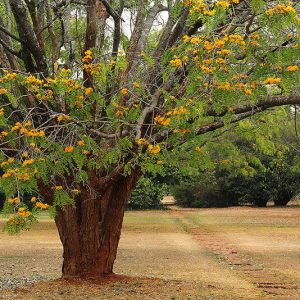
Wild mango / Wilde mango
Wild mango / Wilde mangoThis is a tall tree with a flat-topped, widespreading crown. The yellowish-orange flowers resemble an old fashioned powder puff. Elephants love the fruit!
Botanical Name:
Cordylia africana
Did you know?
Did you know that Africa has its own mango? Although the fruit is not as big and tasty as the exotic one and it belongs to a different family, it is extremely rich in vitamin C.
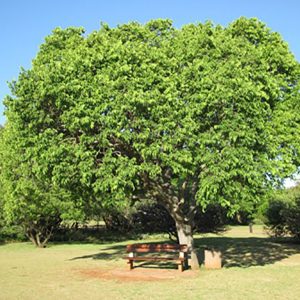
White stinkwood / Wit stinkhout
White stinkwood / Wit stinkhoutAn ideal garden tree – the white stinkwood usually has a single trunk and broadly upright to rounded crown. When planted on the northern or western side of the house, the shade provided cools the house in summer yet allows the sun through to heat up the house in winter.
Botanical Name:
Celtis africana
Did you know?
When freshy cut, the wood has an unpleasant smell, hence the common names “stinkwood”.
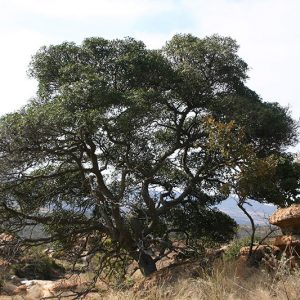
Red milkwood / Moepel
Red milkwood / MoepelA medium sized decorative tree that has a spreading, densely rounded crown. It has the potential to make an excellent evergreen garden specimen for larger gardens, parks and golf courses. This tree casts a deep shade, which offers a cool escape from the hot African sun.
Botanical Name:
Mimusops zeyheri
Did you know?
The Transvaal red milkwood has gained its popularity with people, birds as well as monkeys and baboons through its tasty fruit which are sweet and high in vitamin C.
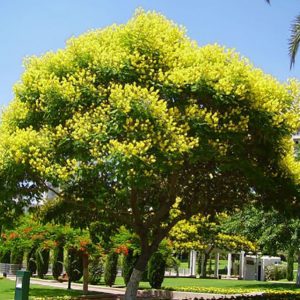
Weepingwattle / Huilboom
Weepingwattle / HuilboomThe weepingwattle has acacia-like foliage and showy yellow flowers. It’s an excellent tree for bee-keepers. It has a spreading untidy canopy and makes a good shade tree for both livestock and humans.
Botanical Name:
Peltohorum africanum
Did you know?
Young leaves and pods are eaten by livestock and the flowers provide a high yield of nectar and pollen for bee-keeping.
